What Are You Looking For?

Neodymium Flexible Magnet (Industrial Grade) – Technical Support
1. What Is an Industrial‑Grade Neodymium Flexible Magnet?
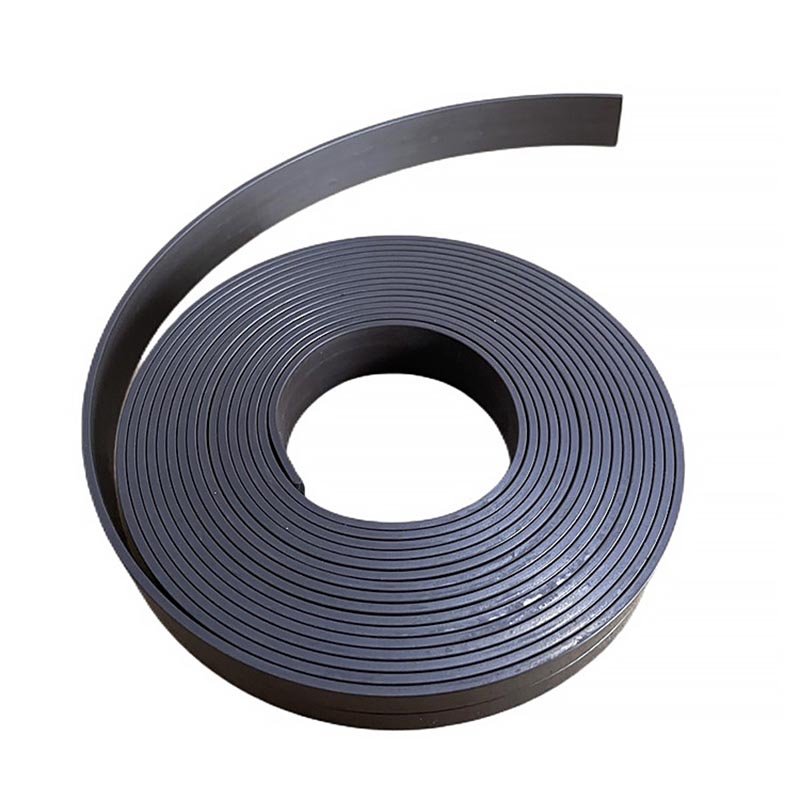
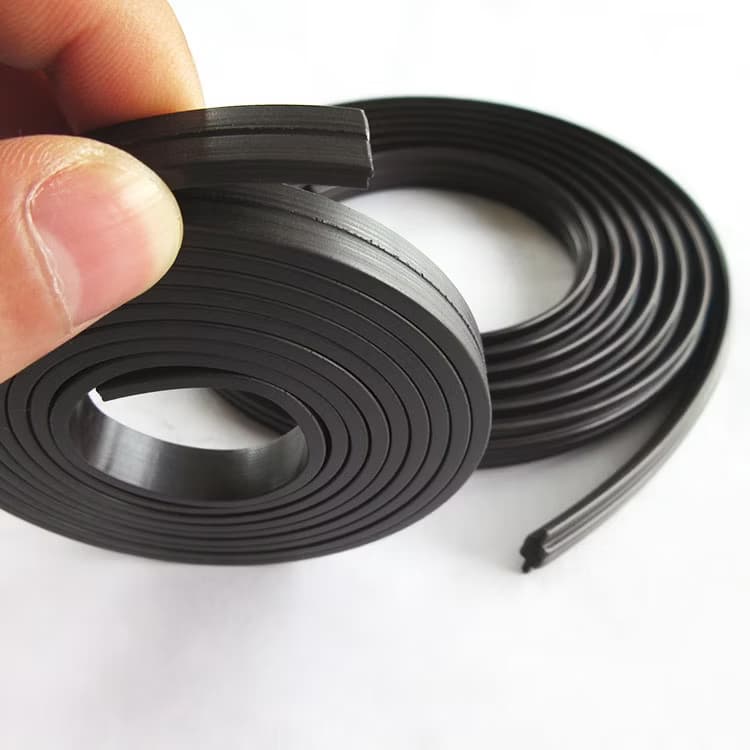
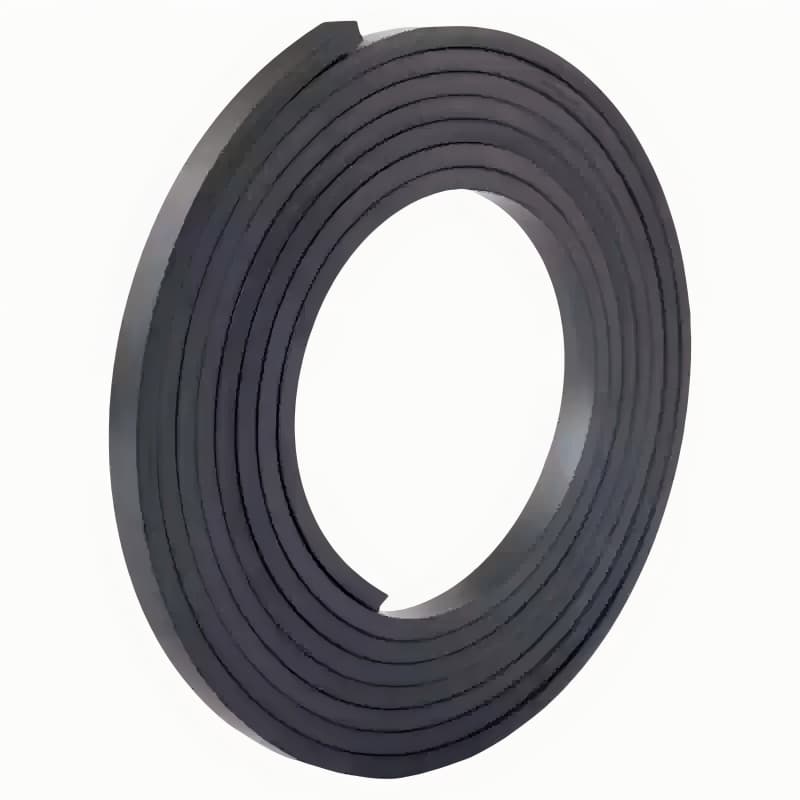
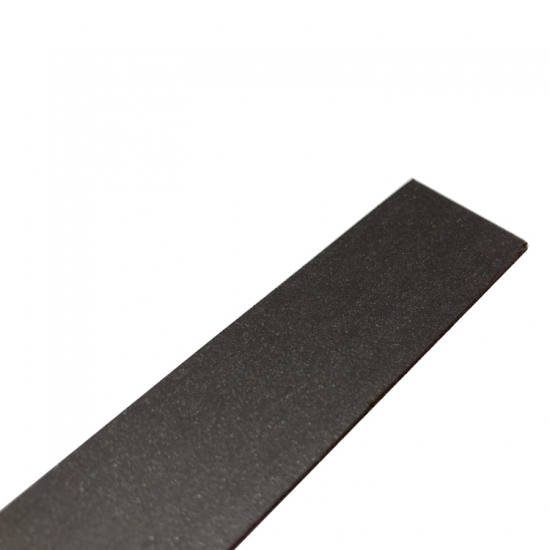
An industrial‑grade neodymium flexible magnet is a composite magnetic material made from high‑energy rare‑earth neodymium‑iron‑boron (NdFeB) magnetic powder and a flexible polymer matrix (e.g., NBR, CPE, PVC) manufactured by extrusion or calendering.
Compared with conventional ferrite flexible magnets, it offers higher energy product, excellent flexibility, and easy integration. It retains the process advantages of rubber magnets – bendable, cuttable, die‑cuttable – while providing magnetic performance close to that of sintered neodymium magnets. It is an ideal choice for industrial door seals, sensor strips, magnetic encoders, jigs & fixtures, and many other applications.
💡 Industrial value: Provide strong magnetic holding or magnetic sensing signals within limited installation space, while withstanding vibration, temperature variations, and oily environments – significantly reducing mechanical complexity and maintenance costs.
2. Key Features & Technical Advantages
| Feature | Industrial Benefit |
|---|---|
| Very high energy product | Max. energy product up to 36–44 kJ/m³, surface field ~200 mT – far above ferrite flexible magnets (5–15 kJ/m³) |
| Flexible construction | Conforms to curved doors, rotating parts, or narrow gaps – no rigid brackets needed |
| Multi‑pole magnetization | Supports 2 to 24 poles alternately along length – ideal for magnetic encoders, speed sensors, precision applications |
| Oil & chemical resistance | Matrix options include NBR or oil‑resistant PVC – suitable for machine tools, hydraulic equipment |
| Wide operating temperature | Standard -20°C ~ +80°C; high‑temperature grade available from -40°C ~ +120°C |
| Adhesive mounting | Available with 3M™ or equivalent industrial‑grade PSA – fast, tool‑free assembly |
| Custom die‑cutting | Supports any complex shape – custom sensor strips, special‑shape holding magnets |
3. Technical Specifications (Industrial Parameter Table)
| Parameter | Typical Value / Range | Remarks |
|---|---|---|
| Composite material | NdFeB powder + NBR / CPE / PVC | Matrix selected by oil/temperature requirements |
| Magnetization type | Multi‑pole axial or radial | Usually single‑side multi‑pole; pole count customizable |
| Surface field (Br) | 0.55 – 0.65 T (5.5–6.5 kGs) | Measured; depends on thickness and measurement position |
| Max. energy product ((BH)max) | 36 – 44 kJ/m³ (4.5–5.5 MGOe) | Typical industrial grade |
| Intrinsic coercivity (Hcj) | ≥ 400 kA/m (≥ 5.0 kOe) | Guaranteed demagnetization resistance |
| Recommended working temp. | -20°C ~ +80°C | Standard grade |
| High‑temp grade (optional) | -40°C ~ +120°C | Requires custom matrix |
| Thickness range | 0.5 mm – 5.0 mm | Common industrial thicknesses: 0.8 / 1.0 / 1.5 / 2.0 mm |
| Width range | 5 mm – 300 mm (rolls) or sheets/die‑cuts | Cut to drawing |
| Hardness (Shore A) | 75–85 | Adjustable |
| Density | 4.8 – 5.2 g/cm³ | |
| Tensile strength | ≥ 8 MPa | Depends on matrix |
| Elongation at break | ≥ 150% | Ensures bending without cracking |
| Pressure‑sensitive adhesive | 3M 467 / 468 / 9495LE or equivalent | Heat‑resistant, high‑tack |
📄 Available documents: Industrial TDS, MSDS, RoHS/REACH statements, measured magnetic performance curves.
4. Typical Industrial Applications
🏭 Industrial Equipment & Mechatronics
| Application Area | Specific Use | Key Material Selection |
|---|---|---|
| Machine tools & automation | Safety door magnetic switches, guard covers, quick‑change jig positioning | Oil‑resistant, impact resistant, thickness ≥ 2 mm |
| Industrial door seals | Control cabinets, switchgear, server rack magnetic seals (high‑force version) | Wide temperature, strong adhesive, uniform magnetism |
| Motors & sensors | DC motor rotor strips, Hall trigger strips, magnetic encoder rings | Multi‑pole precision, pole pitch tolerance < 0.1 mm |
| Packaging & conveying | Magnetic grippers, ferrous debris separators, vibrator feeder strips | Wear resistance, reinforced surface coating |
| Special vehicles | Construction machinery access door latches, emergency vehicle magnetic sign bases | Weather resistance, UV protection, salt spray protection |
| Wind & new energy | Temporary magnetic holders inside nacelles, lightning protection magnetic connectors | Low‑temperature toughness, long‑term outdoor durability |
🔧 Jigs, Fixtures & Automation Components
Magnetic positioning blocks for welding jigs – quick attachment to steel worktables; no bolting required.
Magnetic trays for small ferrous parts – prevents parts from rolling away on assembly lines.
End‑of‑arm magnetic grippers (EOAT) – lightweight, flexible for curved surfaces.
🧲 Replacement for Rigid Magnets
In applications originally using sintered NdFeB or ferrite rigid magnets, if the following pain points exist:
Neodymium flexible magnets become an ideal alternative.
5. Installation & Integration Guide (Industrial Environment)
5.1 Clean the Surface
Use industrial cleaner (acetone, isopropyl alcohol) to remove oil, rust, and old adhesive residue from the mounting surface (steel or equipment frame).
5.2 Cutting & Shaping
5.3 Applying Adhesive (if PSA option chosen)
5.4 Important Notes on Magnetic Holding (Two‑Magnet Pairing)
⚠️ Industrial safety warnings:
6. Industrial Troubleshooting
| Symptom | Possible Cause | Industrial Solution |
|---|---|---|
| Force much lower than expected | Actual air gap larger than design (paint, shim, uneven surface) | Reduce air gap; use thicker magnet (increase flux) |
| Mating surface is non‑ferromagnetic (aluminium, SS304, plastic) | Change attachment point; add a steel backing plate | |
| Magnet exposed to high temperature (>80°C) – irreversible loss | Upgrade to high‑temp grade (120°C); improve ventilation | |
| Partial demagnetization by strong reverse field (e.g., welding current) | Keep away from high‑current loops; choose higher Hcj grade | |
| Adhesive fails | Mounting surface not clean (oil, mould release) | Degrease thoroughly with industrial solvent; abrade surface lightly |
| Excessive shear load or high vibration frequency | Add mechanical fixing (screw clamp); switch to structural adhesive | |
| Strip cracks or breaks | Bend radius too small (<5× thickness) | Increase bend radius; use more flexible matrix |
| Low‑temperature exposure (<-20°C) while under stress | Select cold‑flexible NBR‑based grade | |
| Multi‑pole signal unstable | Uneven pole spacing or insufficient magnetization depth | Provide drawing and magnetization inspection report; check tooling precision |
7. Industrial Certifications & Quality Assurance
| Certification / Test | Description |
|---|---|
| ISO 9001:2015 | Full quality management system |
| IATF 16949 (available on request) | Automotive industry standard – for vehicle‑mounted components |
| RoHS 2.0 | Restriction of hazardous substances (Pb, Hg, Cd, CrVI, PBB, PBDE) |
| REACH | EU chemicals registration – SVHC list available |
| UL 94 V-0 / V-2 (optional) | Flammability rating |
| Salt spray test | According to ASTM B117 – ≥72 hours no red rust (with surface coating) |
| Thermal shock test | -40°C ↔ +100°C, 100 cycles – magnetic force loss <5% |
Batch release tests:
8. Industrial FAQ
Q1: How to choose between neodymium flexible magnets and sintered neodymium magnets in industrial applications?
| Aspect | NdFeB Flexible Magnet | Sintered NdFeB Magnet |
|---|---|---|
| Energy product | 4‑5 MGOe | 35‑50 MGOe |
| Flexibility | Bendable, cuttable | Hard, brittle – cannot be bent |
| Minimum thickness | 0.5 mm | Usually ≥1 mm |
| Max. working temperature | 120°C (special grade) | 220°C (special grades) |
| Cost | Low – medium | High |
| Preferred applications | Thin‑wall, curved surfaces, seals, sensors | High energy density, small‑volume strong magnets |
Q2: What pole pitch accuracy can you achieve for multi‑pole magnetization?
Standard process: ±0.1 mm. For higher precision (±0.05 mm), a precision tooling magnetizer is required – feasibility evaluation needed.
Q3: How to get samples and small quantities?
Free samples of standard widths (12.7/19/25.4 mm) and thicknesses (1.0/1.5/2.0 mm) with PSA are available (shipping charged). Custom sizes, die‑cut shapes, or special matrix require a sample tooling fee – typically $200‑500, refundable against production order.
Q4: What are the MOQ?
Standard rolls (fixed width): 200 meters
Custom die‑cut parts: 5,000 pieces (new tooling)
Special matrix (e.g., NBR oil‑resistant grade): 1,000 m² (or equivalent value)
Q5: How do I request a quote / solution for an industrial application?
Email us with:
Our application engineer will respond within 48 hours with a selection recommendation and quotation.
9. Industrial Customization Services
Our technical team provides:
Free initial technical evaluation – make your industrial design more reliable with magnetic solutions.


 IPv6 network supported